You know the drill. You climb into bed exhausted, close your eyes — and your brain decides now is the perfect time to replay every conversation from the last decade. Hours pass. The alarm looms.
If this sounds familiar, you’re not alone. According to CDC’s sleep guidelines for adults, more than a third of U.S. adults regularly sleep less than seven hours a night. The consequences go far beyond grogginess. Poor sleep raises your risk for obesity, heart disease, diabetes, and depression.
But here’s what most sleep advice gets wrong: better sleep isn’t just about what you do at bedtime. It’s shaped by decisions you make all day long — from your morning light exposure to your afternoon coffee, your evening meal, and the temperature of your bedroom.
This guide breaks down 15 evidence-based strategies for better sleep, organized into a practical timeline you can follow from morning to night. No gimmicks. No expensive gadgets. Just science-backed habits that work.
Table of Contents
Better Sleep in 5 Quick Answers:
- What makes sleep “better”? → Falling asleep within 15–20 minutes, staying asleep through the night, and waking refreshed after 7–9 hours.
- What’s the #1 fix? → A consistent sleep-wake schedule — even on weekends.
- Do supplements help? → Melatonin and magnesium may help short-term, but habits matter more.
- When should I worry? → If poor sleep persists 3+ nights per week for over three months, consult a healthcare provider.
- What’s the 10-3-2-1-0 rule? → A simple framework: 10 hrs before bed = no caffeine, 3 hrs = no food/alcohol, 2 hrs = no work, 1 hr = no screens, 0 = times you hit snooze.
What Is Better Sleep (and Why Does It Matter)?
Better sleep is the consistent ability to fall asleep within a reasonable time, cycle through all sleep stages without disruption, and wake feeling restored. It is not simply about logging more hours — it is about the quality, consistency, and timing of your rest.
Sleep quality matters because your body uses deep and REM sleep to consolidate memory, repair tissue, regulate hormones, and strengthen immune function. When these processes are interrupted, the effects ripple into every part of your health.
The Science Behind Sleep Quality
Your sleep is governed by two systems working together:
- Circadian rhythm — your internal 24-hour clock, primarily set by light exposure. It tells your brain when to produce melatonin (the sleep hormone) and when to ramp up cortisol (the wake-up hormone).
- Sleep pressure (adenosine) — a chemical that accumulates in your brain throughout the day. The longer you’re awake, the more adenosine builds up, making you progressively sleepier. Caffeine works by blocking adenosine receptors, which is why a late coffee can sabotage your sleep.
When these two systems are aligned — high sleep pressure meeting a well-timed circadian dip — you fall asleep quickly and sleep deeply.
Sleep Stages Explained in 60 Seconds
Each night, your body cycles through four stages roughly every 90 minutes:
| Stage | Duration | Purpose |
|---|---|---|
| N1 (Light sleep) | 1–5 min | Transition from wakefulness |
| N2 (Moderate sleep) | 10–25 min | Heart rate drops, body temperature falls |
| N3 (Deep sleep) | 20–40 min | Physical repair, immune strengthening, growth hormone release |
| REM (Dream sleep) | 10–60 min | Memory consolidation, emotional processing |
Deep sleep dominates early in the night. REM sleep increases toward morning. Both are essential.
Your Daily Better Sleep Timeline — Morning to Night
Most sleep guides hand you a random list of tips. That approach misses the point — better sleep is a daylong process. Here’s when each action matters most.
Morning (6–10 AM): Set Your Circadian Clock

Your morning routine has more impact on tonight’s sleep than your bedtime routine does. Exposure to bright natural light within the first hour of waking signals your suprachiasmatic nucleus (the brain’s master clock) to suppress melatonin and start your 24-hour countdown to sleepiness.
- Step outside for 10–20 minutes of direct sunlight, even on cloudy days.
- Wake at the same time daily — including weekends. Consistency matters more than total hours.
- Avoid sunglasses for the first 15 minutes outdoors (the light exposure needs to reach your retina).
Afternoon (12–4 PM): Protect Your Sleep Pressure
Adenosine has been building in your brain since you woke up. This is the “pressure” that will eventually make you feel sleepy. Two things can interfere with it:
- Caffeine — blocks adenosine receptors. According to research published in the Journal of Clinical Sleep Medicine, caffeine consumed even six hours before bedtime reduced total sleep by about 40 minutes. Set a hard caffeine cutoff by 2 PM (or earlier if you’re caffeine-sensitive).
- Long naps — discharge too much sleep pressure too early. If you must nap, keep it under 20 minutes and before 3 PM.
Evening (6–9 PM): Wind Down the Right Way
- Eat dinner 2–3 hours before bed. A full stomach triggers digestion processes that can interfere with sleep onset.
- Avoid alcohol within 3 hours of bedtime. Alcohol sedates you initially but fragments sleep during the second half of the night, reducing REM.
- Dim artificial lights. Bright overhead lighting after sunset suppresses melatonin. Switch to warm, low lamps.
Bedtime (9 PM–Midnight): Optimize Your Environment
- Stop screens 60 minutes before bed. Blue light from phones and laptops delays melatonin release. If you must use a device, enable night mode and reduce brightness.
- Cool your bedroom to 60–67°F (15–19°C). Following guidelines from the National Sleep Foundation, a cooler room promotes faster sleep onset.
- Block all light and noise. Use blackout curtains or a sleep mask. Consider earplugs or a white noise machine.
- Reserve your bed for sleep only. Working, scrolling, or watching TV in bed weakens the mental association between your bed and sleep.
15 Proven Tips for Better Sleep
Here’s every evidence-based tip from the timeline above, plus a few more:
- Get bright light first thing in the morning — anchors your circadian rhythm.
- Keep a consistent sleep-wake schedule — even on weekends.
- Cut caffeine by early afternoon — it has a half-life of 5–6 hours.
- Exercise regularly — but time it right — morning or afternoon workouts improve deep sleep. Avoid vigorous exercise within 3 hours of bedtime.
- Limit naps to 20 minutes before 3 PM — preserves nighttime sleep pressure.
- Eat your last big meal 2–3 hours before bed — digestion and sleep don’t mix well.
- Avoid alcohol within 3 hours of bedtime — it disrupts REM sleep.
- Dim the lights after sunset — supports natural melatonin production.
- Stop screens 60 minutes before bed — blue light delays sleepiness.
- Try the 10-3-2-1-0 sleep rule — a simple checklist for daily habits (details below).
- Keep your bedroom cool (60–67°F / 15–19°C) — your core temperature needs to drop to initiate sleep.
- Block light and noise completely — blackout curtains, sleep masks, and white noise machines.
- Use relaxation techniques — deep breathing (4-7-8 method), progressive muscle relaxation, or a body scan meditation.
- Don’t stay in bed if you can’t sleep — after 20 minutes, get up and do a quiet activity in dim light until you feel drowsy.
- Consider melatonin or magnesium (with caution) — low-dose melatonin (around 0.5–3 mg) can help reset timing; magnesium glycinate may promote relaxation. Consult a healthcare provider first.
Consider melatonin or magnesium (with caution) — low-dose melatonin (around 0.5–3 mg) can help reset timing; magnesium glycinate may promote relaxation. For a deeper look at how sleep intersects with cellular aging and longevity research, NMN research and aging science offers a useful resource. Consult a healthcare provider first.
The 10-3-2-1-0 Sleep Rule
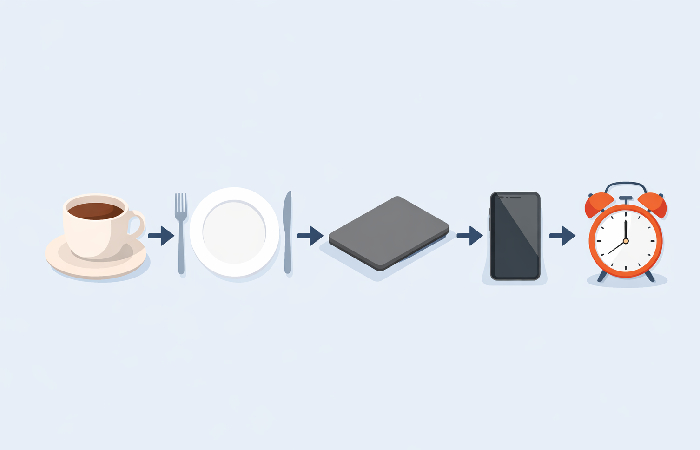
This simple framework turns better sleep into a daily checklist:
| Hours Before Bed | Action |
|---|---|
| 10 hours | No more caffeine |
| 3 hours | No more food or alcohol |
| 2 hours | No more work |
| 1 hour | No more screens |
| 0 | Times you hit the snooze button |
Better Sleep Comparison — Habits vs. Supplements vs. Products
| Category | Examples | Effectiveness | Cost | Best For |
|---|---|---|---|---|
| Habits | Consistent schedule, light exposure, exercise | High — strongest evidence | Free | Everyone |
| Supplements | Melatonin, magnesium, L-theanine | Moderate — works for some | $10–$30/month | Those with mild difficulty falling asleep |
| Products | Sleep masks, white noise machines, weighted blankets | Moderate — comfort-based | $20–$200 | Environment-related sleep issues |
| Apps | BetterSleep, Calm, Headspace | Low to moderate | $0–$70/year | Stress or anxiety-related sleep struggles |
Key takeaway: Habit changes deliver the most consistent, long-lasting results. Supplements and products work best as complements, not replacements.
Common Mistakes That Ruin Your Sleep
Even well-intentioned people sabotage their sleep without realizing it. Watch out for these:
- “Catching up” on weekends. Sleeping in two extra hours on Saturday shifts your circadian rhythm — the equivalent of jet lag. Keep your wake time within 30 minutes of your norm.
- Relying on alcohol to relax. It might help you fall asleep, but it fragments the second half of the night and suppresses REM.
- Exercising right before bed. Vigorous activity raises core temperature and adrenaline, the opposite of what your body needs to sleep.
- Staying in bed when you can’t sleep. This trains your brain to associate the bed with wakefulness and frustration. Get up after 20 minutes.
- Obsessing over sleep tracker data. A growing concern called orthosomnia — anxiety about achieving “perfect” sleep tracker scores — can actually make sleep worse.
- Scrolling “just for five minutes.” Blue light aside, engaging content raises dopamine and alertness, pushing back sleep onset.
Who This Guide Is For — and Who Should See a Doctor
This guide is best for:
- Healthy adults who want to improve sleep quality and consistency
- People new to sleep hygiene who need a structured starting point
- Anyone tired of generic tip lists and wanting to understand why these strategies work
This guide is NOT a replacement for professional help if you have:
- Chronic insomnia — difficulty sleeping 3+ nights per week for 3+ months. Ask your doctor about Cognitive Behavioral Therapy for Insomnia (CBT-I), widely considered the gold-standard treatment.
- Sleep apnea — snoring, gasping, or pauses in breathing during sleep. Requires a sleep study and potentially a CPAP device.
- Restless legs syndrome, narcolepsy, or parasomnias — these require diagnosis and specialist care.
If your sleep problems persist despite consistent lifestyle changes, consult a healthcare provider. Better sleep starts with the right habits, but some conditions need more than habits alone.
Final Verdict — Your Better Sleep Action Plan
Better sleep isn’t a mystery. It’s the result of deliberate choices made throughout the day — from morning sunlight to a cool, dark bedroom at night.
If you remember just three things:
- Set your circadian clock with morning light and a consistent wake time.
- Protect your sleep pressure by cutting caffeine early and limiting naps.
- Prepare your body by dimming lights, cooling your room, and stepping away from screens before bed.
Start with the 10-3-2-1-0 rule tomorrow. You don’t need to change everything at once — just pick two or three tips from this guide and build from there. Better sleep compounds. One good night leads to another.
Frequently Asked Questions About Better Sleep
Q: How much sleep do I actually need?
A: Most adults need 7–9 hours per night, though individual needs vary slightly. Consistently waking without an alarm and feeling refreshed is a better indicator than a specific number.
Q: What is the 10-3-2-1-0 rule for sleep?
A: It’s a framework for daily habits: no caffeine 10 hours before bed, no food or alcohol 3 hours before, no work 2 hours before, no screens 1 hour before, and zero snooze-button hits in the morning.
Q: Does melatonin actually help with sleep?
A: Melatonin can help with timing — such as adjusting to a new schedule or time zone — but it’s not a sedative. Low doses (0.5–3 mg) are most effective. Consult a healthcare provider before using it regularly.
Q: How can I fall asleep faster?
A: Keep a consistent bedtime, avoid screens for 60 minutes before bed, and try a breathing technique like the 4-7-8 method (inhale 4 seconds, hold 7, exhale 8). If you’re not asleep in 20 minutes, get up and do something calming.
Q: Is it bad to sleep with my phone next to the bed?
A: Yes. Even if you don’t use it, the temptation to check notifications disrupts your wind-down. Notifications can also wake you during lighter sleep stages. Charge it in another room or use airplane mode.